
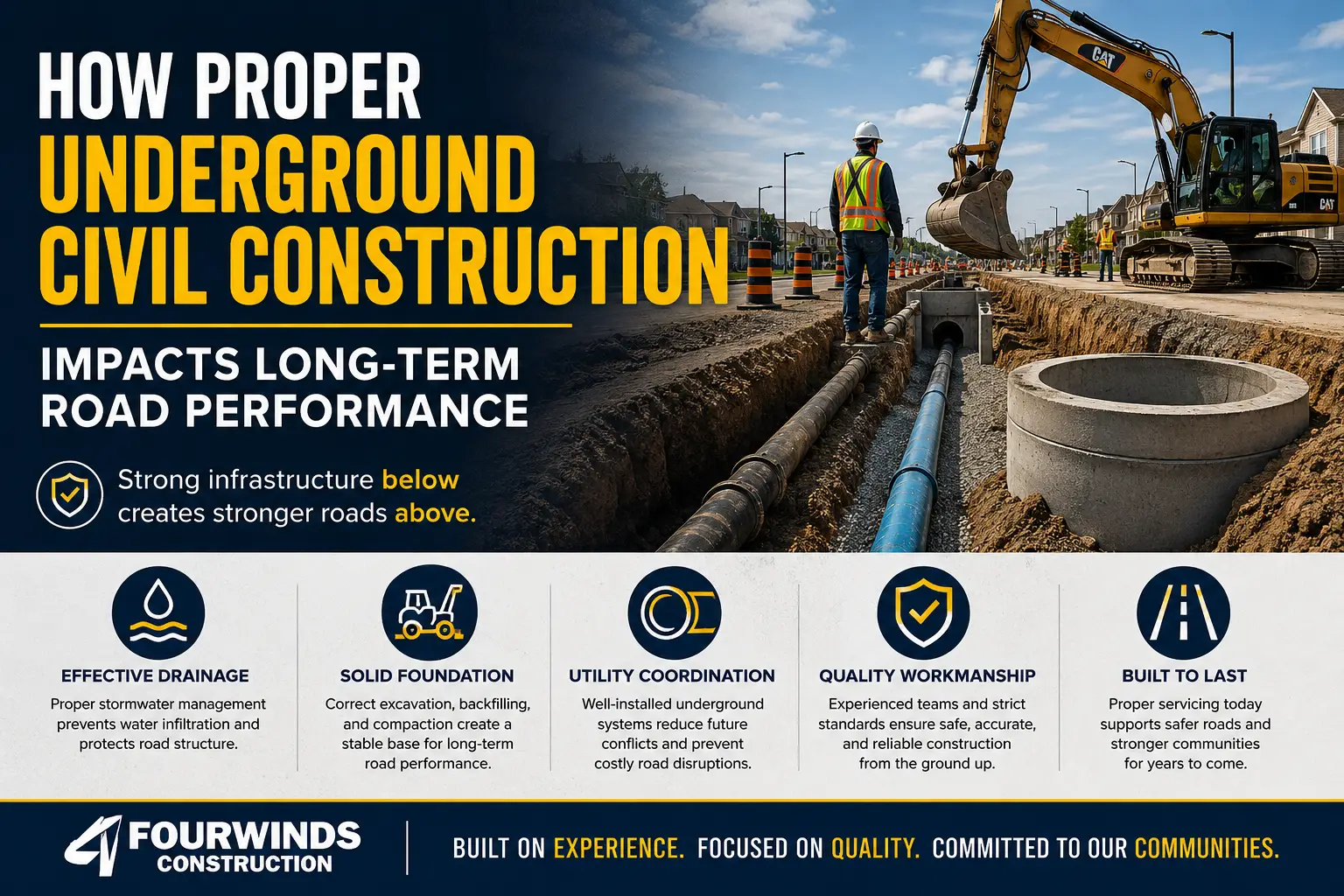
When people think about road construction, they often focus on the finished pavement they drive on every day. However, what happens beneath the surface is just as important, if not more important to the long-term performance and durability of a road. Properly designed and installed civil underground services play a major role in ensuring roads remain stable, safe, and functional for years to come.
In civil construction, servicing involves the preparation and installation of critical underground infrastructure before roads are completed. This includes storm and sanitary sewers, watermain systems, drainage systems, excavation work, grading, and underground utility coordination. When these systems are installed properly from the beginning, they help support the overall integrity of the road structure above.
One of the biggest factors affecting road longevity is stormwater management. Poor drainage can lead to water infiltration beneath the road surface, weakening the base layers and eventually causing cracks, potholes, shifting, and premature deterioration. Proper underground servicing ensures that water is directed and managed correctly through well-designed storm systems and grading solutions. This reduces the risk of long-term structural damage and costly future repairs.
Compaction and soil preparation are also critical during the installation process. Roads are only as strong as the foundation beneath them. If excavation, backfilling, or compaction is not completed correctly, the road surface may begin to settle unevenly over time. Experienced construction teams understand the importance of proper ground preparation and follow engineering specifications carefully to create stable conditions before paving begins.
Underground utility coordination is another important aspect of municipal construction that directly impacts future road performance. Properly installed watermains, sanitary systems, and utility crossings help prevent future disruptions and emergency repairs that can damage road infrastructure. Careful planning and coordination during the early stages of a project help reduce conflicts and improve long-term reliability.
Quality workmanship and experienced project management also make a significant difference. Municipal projects involve multiple stages, inspections, and technical requirements that must all work together efficiently. Skilled operators, supervisors, and project managers help ensure work is completed safely, accurately, and according to municipal and engineering standards.
In growing communities across Ontario, infrastructure demands continue to increase as new residential, commercial, and industrial developments expand. Reliable civil servicing helps municipalities and developers build roads and underground systems that can handle long-term traffic, weather conditions, and population growth.
At the end of the day, long-lasting roads are built from the ground up. Proper servicing is not simply an early stage of construction; it is the foundation that supports the long-term performance, safety, and durability of the entire project. Investing in quality infrastructure today helps reduce maintenance costs, improve public safety, and support stronger communities for years to come.